

For years, giants like Strava, Nike Run Club and Garmin have dominated the running market. However, a new wave of elite runners is looking for something that "likes" and closed ecosystems cannot provide: results based on pure physiological science and absolute privacy. This is where Aura Kinetic redefines the rules of the game.
It is not about saying one is better than the other, but about understanding the purpose. If you are looking for social validation, Strava is unbeatable. If you are looking for a simple app to get started, Nike Run Club delivers. But if you want to optimize your VO2 Max, manage your systemic fatigue and prevent injuries with professional-grade algorithms, the scales tip toward the Kinetic ecosystem.
1. The Validation Trap (Strava & Nike)
On Strava, every run is public. On Nike Run Club, achievements are designed to give you a quick dopamine hit. This creates an invisible psychological pressure to always run faster than the plan requires so you can "look good." This "Kudos Race" is the main cause of overtraining and plateaus.
Aura's Proposal: There is no social network. Aura Kinetic is a private environment between you and your data. By removing social pressure, the athlete feels free to do recovery runs at the true intensity, allowing the body to recover. On Aura, the only follower that matters is your performance tomorrow.
2. Surgical Precision: Aura vs Garmin
Garmin has been the king of hardware for decades, but its software tends to be a closed ecosystem and is sometimes slow to adopt new processing metrics. While most apps record one data point per second (1Hz), Aura Kinetic samples the Apple Watch's inertial sensors at 50Hz (50 times per second).
This allows us to capture the micro-synchronization of your stride and your true power with a fidelity that traditional multisport watches simply do not process. Strava analyzes your past; Aura analyzes the physics of your present.
The Pro's Dilemma: A good runner knows that "more" is not "better." While traditional apps reward volume, Aura Kinetic rewards biological efficiency. If your Readiness is in the red, Aura will tell you to stop, something social apps rarely dare to do.
3. Next-Generation Maps
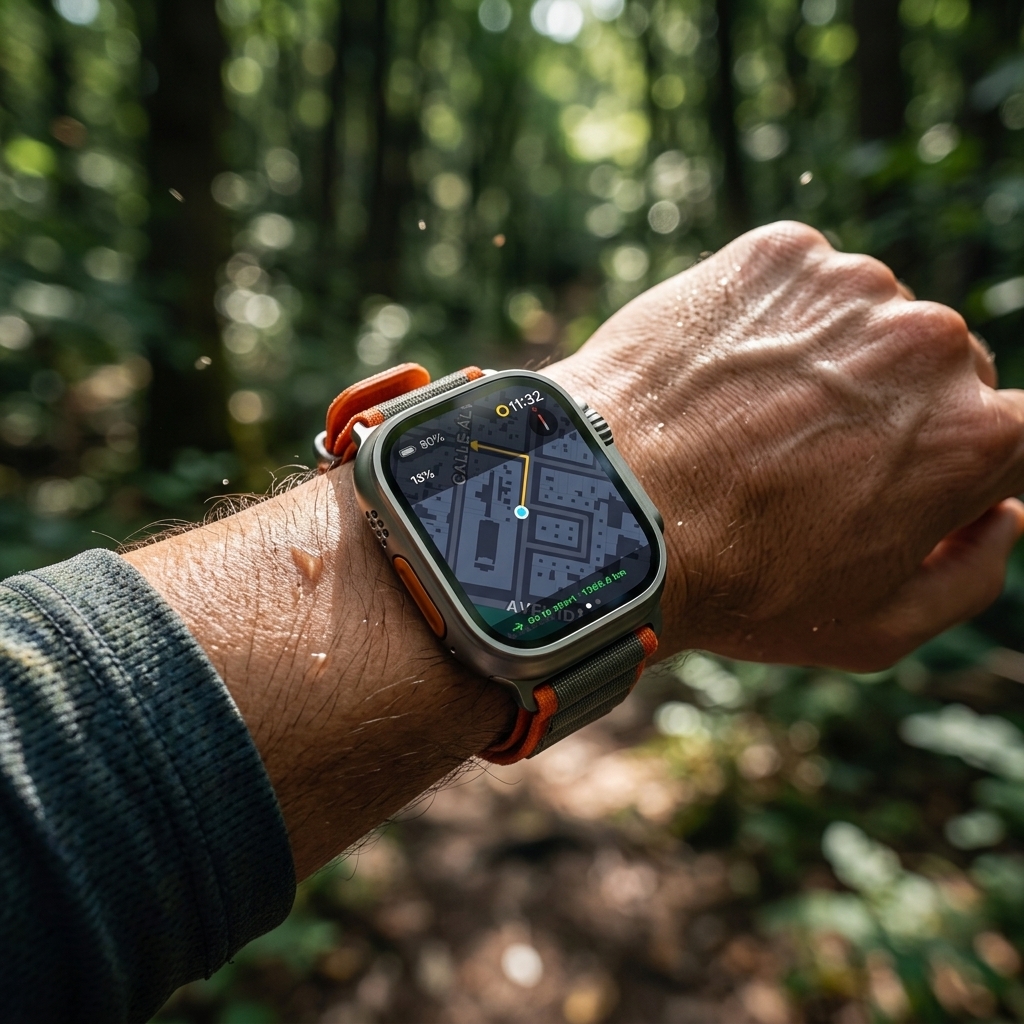
Unlike Nike or Strava, which often rely on a data connection to render detailed maps during a run, Aura Kinetic uses native Offline Vector Maps on the Apple Watch. This ensures that, whether you are in the middle of the city or on the highest peak, your navigation is smooth, accurate and uses minimal battery.
4. Conclusion: Science or Popularity?
Many pro athletes are adopting a hybrid strategy: they use Aura Kinetic for serious, private and analytical training, and sync the final result to Strava for the social side. However, the "dirty work" and decision-making happen on Aura.
Aura Kinetic was not designed to collect followers; it was designed to collect personal victories based on science. The question is: do you want people to see your workouts, or do you want them to see your results?