

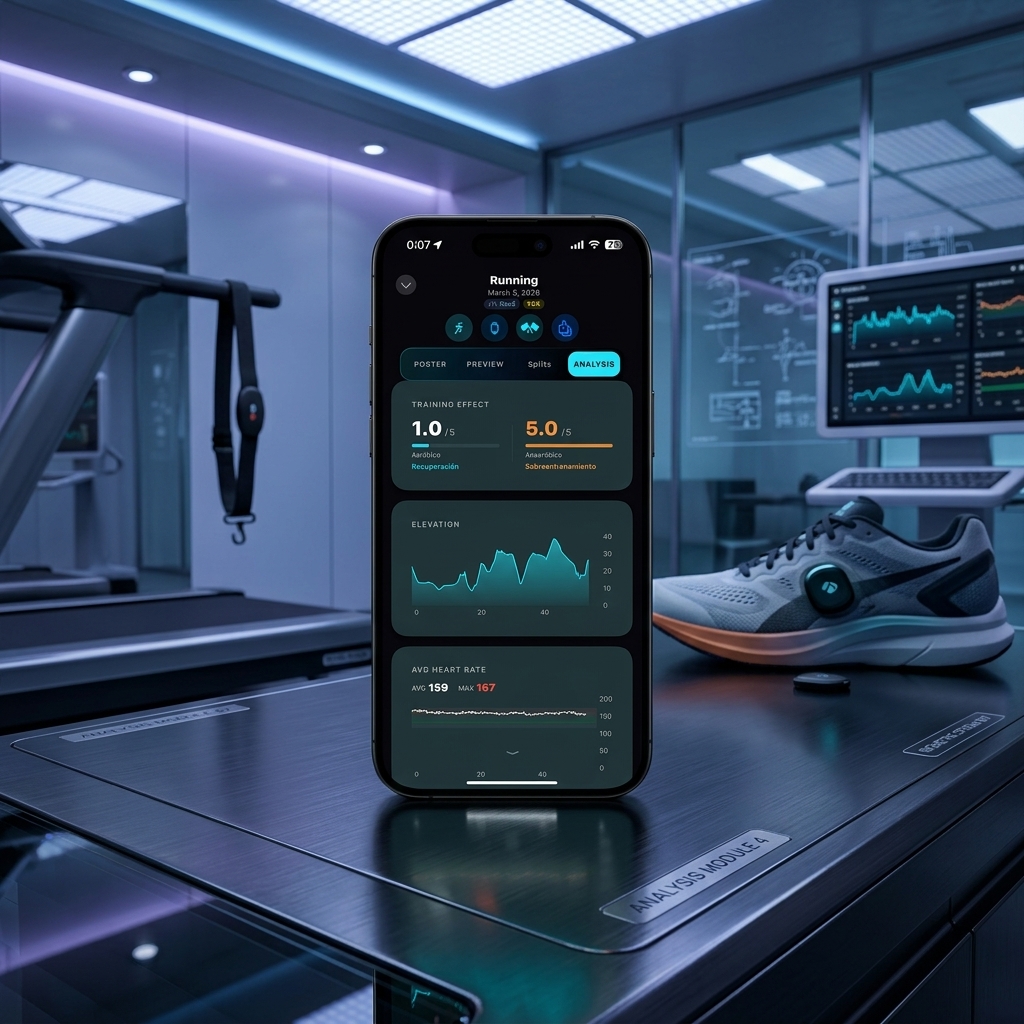
You open the Apple Health app and see a 25ms HRV (Heart Rate Variability) reading. You panic. "I'm overtraining," you think. Yet you head out for a run and feel stronger than ever. What's going on? The answer is simple: the raw data is lying to you.
The Apple Watch is one of the most accurate devices on the market for capturing HRV, but the way the native operating system presents the data can be a trap for athletes. At Aura Kinetic, we've built a biometric "translator" that ignores the noise and focuses on the real signal. Understanding this is the key to stop obsessing over numbers and start trusting the science.
1. The Myth of High vs. Low Values
In the world of HRV, higher isn't always better, and lower isn't always worse. HRV measures the time between successive heartbeats. A healthy heart doesn't beat like a metronome; it's irregular, which indicates that your Sympathetic and Parasympathetic nervous systems are in a constant dance of balance.
The common mistake: Comparing your HRV to another runner's. Your HRV is determined genetically and by your age. A 50-year-old with 40ms could be at peak fitness, while a 20-year-old with 40ms might be sick. Aura establishes your unique personal baseline before making any judgment.
2. How Aura Kinetic Filters the Noise
In Aura's code, we apply statistical smoothing filters. A single low HRV reading last night doesn't destroy your Readiness. For the system to give you a red alert, we need to see a significant deviation from your 7-day moving average.
- SDNN vs. RMSSD: Apple typically reports SDNN (the standard deviation of all intervals). For sports, the more useful metric is RMSSD, which better reflects parasympathetic system activity (recovery). Aura performs this internal conversion so the score you see on screen is athletically relevant.
- The Sleep Stage Effect: HRV varies depending on whether you're in REM or Deep Sleep. Aura prioritizes readings taken during the most stable states to avoid false spikes caused by intense dreams.
Fun Fact: Alcohol is the biggest "falsifier" of HRV. A single glass of wine can sink your variability for 24 hours, even if you sleep 8 hours. Your body spends the night processing the toxin instead of repairing tissues. Aura detects these anomalous drops and will warn you to avoid high-intensity sessions.
3. Interpreting Fatigue: Sympathetic vs. Parasympathetic
Aura analyzes whether your fatigue is "Sympathetic" (you're wired, can't rest) or "Parasympathetic" (you feel drained, your pulse won't rise).
- Low HRV + High RHR (Resting Heart Rate): A classic sign of acute stress. Your body is fighting something (hard training, a virus, work stress).
- High HRV + Low RHR: Usually good, but if you feel "empty," it could be a sign of extreme parasympathetic overtraining. Aura can detect this paradoxical state and suggest total rest.
4. Pro Tips for Athletes
To get the best data from Aura, we recommend:
- Wear your Apple Watch snugly: If the watch slides around on your wrist, HRV capture will be poor.
- Eat dinner 3 hours before bed: This allows the parasympathetic system to activate before Aura starts measuring your recovery.
- Don't look at the number when you wake up: Look at the Readiness. Let the algorithm do the heavy lifting of interpretation.